
Thoughts on - ARFID
Most people I speak to have never heard of ARFID - neither had I until I was diagnosed with it in 2019 after a two year battle.

*Trigger warning - eating disorders
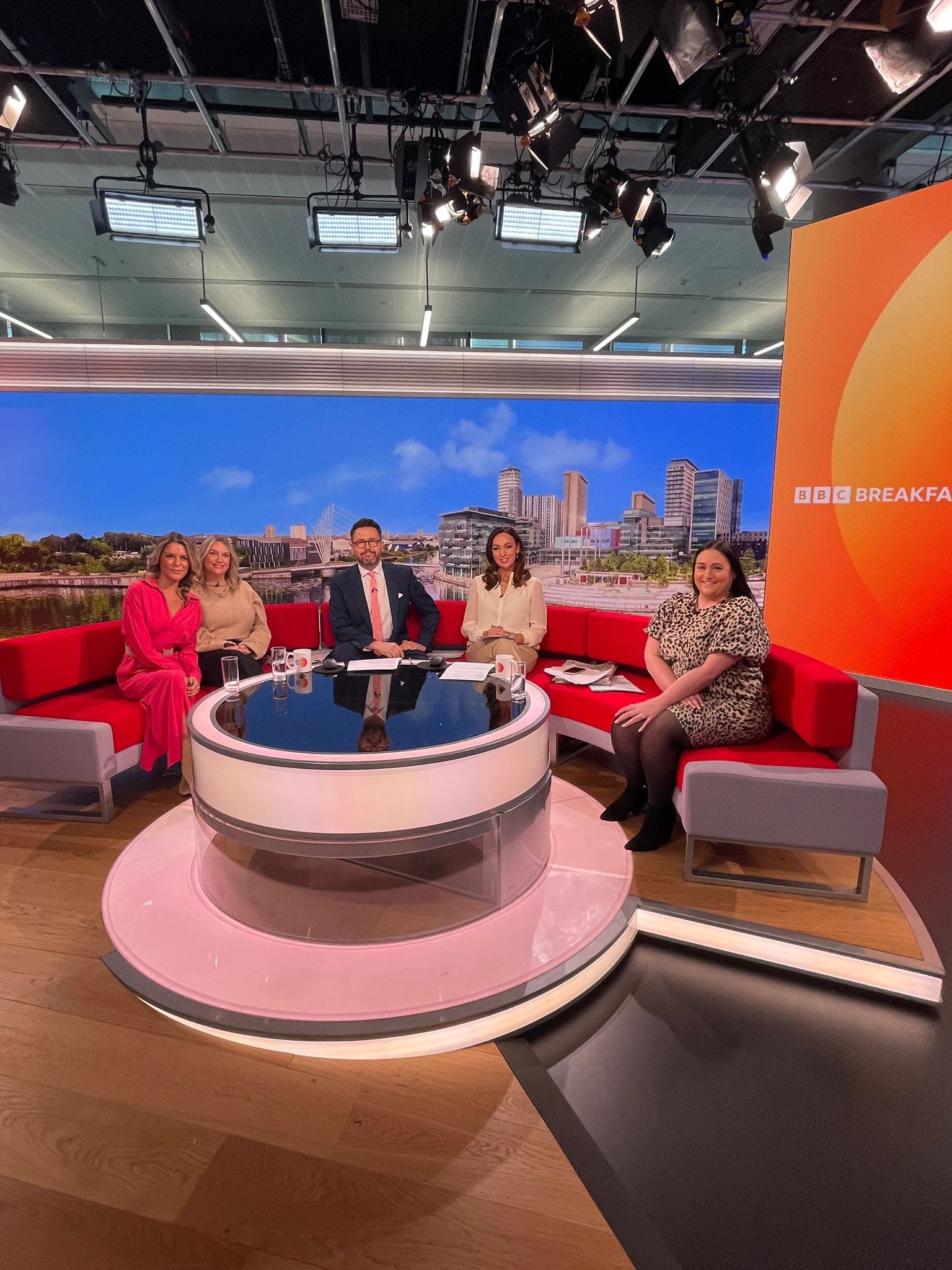
As Eating Disorder Awareness Week 2024 comes to a close, you may have seen me on social media, Times Radio or BBC Breakfast this week discussing my lived experience alongside eating disorder charities Beat and Seed.
ARFID, which stands for avoidant restrictive food intake disorder, is a little known eating disorder which can have a devastating impact on those living with it.
I don’t look like someone who has an eating disorder.
My body shape isn’t aligned with the image that someone in my situation ‘should’ have. I've had suspicious looks and unintentionally offensive comments (the words ‘picky eating’ and ‘attention-seeking’ were thrown about) when speaking openly about my own lived experience.
And that’s the thing with ARFID.
It's not usually about body image or trying to control weight. It’s so much more complex than that. The assumptions and misconceptions can be incredibly dangerous.
My relationship with food had always been relatively normal, bar a period in childhood where I refused to eat anything but pasta and cheese.
Despite growing up in the late nineties reading teen magazines, wearing low-rise jeans and listening to Kate Moss spouting nonsense quotes, I never partially bowed to societal pressures.
My eating disorder came out of the blue in 2017.
I had a chest infection and essentially ended up choking on my own saliva. I woke up the next day and physically couldn’t swallow my breakfast.
The same thing happened later that day when I tried to eat a sandwich at work. After a week of living on protein shakes and blended soup, I went to see my GP.
They told me it was likely a temporary trauma and, rather dismissively, sent me on my way with no helpful advice. I was too embarrassed to go back - until after four months when I’d intentionally lost almost a third of my body weight.
As it was having such a massive impact on my physical health, they then agreed to refer me to an ear, nose and throat clinic to investigate and told me to continue on a liquid diet in the meantime.
I was utterly terrified and convinced there was something dreadfully wrong with my body. My frantic midnight Google searches never amounted to much and the medical professionals I saw were equally perplexed.
Shame and fear consumed me. A large part of life involved food, either through socialising in restaurants, cooking for friends and attending weddings to entertaining clients at awards evenings or breakfast networking events.
Trying to explain to others why I wasn’t eating, picking at my food or taking two hours to eat a meal when I didn’t have an answer made these occasions unbearable.
I would often lie, saying I had stomach issues, wasn’t hungry or was feeling unwell that day.
The reality was that my mind had somehow convinced me that food was dangerous.
It became a red flag to be avoided at all cost and told myself that I would choke and die if I ate anything solid without chewing each mouthful for at least ten minutes.
The accompanying anxiety didn’t help, presenting physical symptoms in the form of a dry mouth and tight throat.
Eating in a busy workplace became an issue. I would often resort to sitting in my car alone at lunchtime to prevent the growing comments and judgement. On the most extreme days, I had to call in sick as I couldn’t face it at all.
I became isolated and quietly slipped into a period of depression.
After a pretty terrifying two years, with stints in and out of hospital as my health declined, a speech therapist gently suggested that the problem may be psychological and introduced me to the concept of ARFID.
My GP agreed and after being formally assessed, I was given a diagnosis in 2019. I was referred for Cognitive Behavioral Therapy (CBT) but this got cancelled as COVID hit.
The lockdowns that followed helped my recovery in an unexpected way. I could eat my lunch without time restrictions or an audience as I worked from home and the pressure to socialise was removed.
I began experimenting with food, pushing myself to try different textures and praised myself whenever I broke through a new food barrier.
Over the course of two years, I had gained weight and was eating a healthy, varied diet.
I’m fairly certain I’ll always have ARFID on some level but it’s no longer dominating my life. My body is nurtured and I can even eat in public now.
Recently, I was in a restaurant with my husband when a plate of sushi sparked that old familiar panic. The nori wrap was proving tricky to chew and he spotted my distress without me saying a word.
He reassured me, saying we had plenty of time and that I was safe. That small act of patience and understanding made all the difference.
When I first started my NCTJ journalism course last year, I knew it was something I wanted to write a piece on at some point.
After talking to another person living with ARFID, charities and a psychiatrist, I realised that there is still so much work to be done (you can read the finished article on Mancunian Matters here) and have since become a media ambassador for Beat to help in their mission to raise awareness.
Since speaking publicly, I’ve been overwhelmed by the amount of messages I’ve had from people who either recognised it in themselves or in loved ones, or were simply curious to learn more.
I had family members say that they’d no idea of the severity of what I’d been through.
Beat has seen a sevenfold increase in calls to their helpline relating to ARFID over the past five years. In 2018, they received 295 calls for support with ARFID, or 2% of total calls. By 2023, this figure had risen to 2054 calls, or 10% of total calls for the year.
Currently, the NHS does not currently provide ARFID support services in all areas of the UK and overall, there is very little research available worldwide, especially in adult cases - it mainly presents in childhood and there are emerging links between ARFID and autism.
It’s a very real debilitating, traumatic illness and can have fatal outcomes if left unmanaged.
If you or someone you love needs support, there is help available. Beats helpline is open 365 days a year, seven days a week. You can find more information here or call 0808 801 0677.
Header image - Canva